Enterprise sales isn’t just about closing big deals—it’s about building long-term relationships, navigating complex decision-making processes, and delivering transformative value. In this deep dive, we uncover the secrets behind successful enterprise sales strategies that scale.
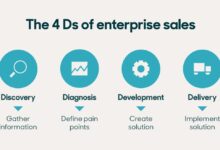
What Is Enterprise Sales and Why It Matters

Enterprise sales refers to the process of selling high-value products or services to large organizations, typically involving long sales cycles, multiple stakeholders, and customized solutions. Unlike transactional or SMB (small and medium business) sales, enterprise sales focus on solving complex business problems through strategic partnerships.
Defining the Scope of Enterprise Sales
Enterprise sales deals usually exceed six or seven figures and involve contracts lasting months or even years. These deals often require integration with existing systems, extensive training, and ongoing support. The buyer is not a single individual but a committee of decision-makers including C-suite executives, IT managers, procurement officers, and end-users.
- Sales cycles can last from 6 to 18 months.
- Deal sizes often range from $100,000 to millions of dollars.
- Solutions are highly customized to meet specific organizational needs.
According to Gartner, over 70% of enterprise buying committees now include five or more stakeholders, making alignment across departments critical.
How Enterprise Sales Differs from SMB Sales
While SMB sales focus on speed, simplicity, and direct communication, enterprise sales demand patience, precision, and deep research. In SMB sales, one decision-maker might approve a purchase quickly. In contrast, enterprise deals require consensus across legal, finance, IT, and operations teams.
- SMB sales often use product-led growth models; enterprise sales rely on relationship-led models.
- Pricing is usually fixed in SMB deals but negotiated extensively in enterprise contracts.
- Post-sale onboarding and success management are far more structured in enterprise sales.
“Enterprise selling is not about pushing a product—it’s about co-creating a solution that transforms how a company operates.” — Jill Konrath, Sales Strategist and Author
The Anatomy of a Successful Enterprise Sales Process
A well-structured enterprise sales process is the backbone of predictable revenue growth. It ensures consistency, improves forecasting accuracy, and empowers sales teams to navigate complexity with confidence. Let’s break down the key stages that define a winning enterprise sales framework.
1. Prospecting and Target Account Identification
Not all companies are viable targets for enterprise sales. The first step is identifying organizations that not only have the budget but also face challenges your solution can solve. This requires a blend of data analytics, market research, and strategic account planning.
- Use intent data platforms like 6sense or Gombong to identify companies actively researching solutions like yours.
- Leverage firmographic data (industry, revenue, employee count) to prioritize accounts.
- Apply account-based marketing (ABM) principles to engage key decision-makers with personalized messaging.
Top-performing sales teams spend 30% of their time on targeted prospecting, according to Salesforce’s State of Sales Report.
2. Discovery and Needs Assessment
This stage is where trust begins to form. The goal is not to pitch but to understand. Effective discovery involves asking open-ended questions, listening actively, and mapping the customer’s pain points to your solution’s capabilities.
- Ask about current workflows, pain points, and desired outcomes.
- Identify both economic buyers and influencers within the organization.
- Document the customer’s success criteria and KPIs.
A McKinsey study found that sales reps who lead with insight and diagnostic questioning are 2.3x more likely to win enterprise deals.
3. Solution Design and Proposal Development
After understanding the customer’s needs, the next step is crafting a tailored solution. This isn’t just about features—it’s about demonstrating business impact. The proposal should clearly articulate ROI, implementation timelines, and risk mitigation strategies.
- Include case studies from similar industries.
- Provide a phased rollout plan to reduce perceived risk.
- Highlight compliance, security, and scalability aspects.
Proposals that include quantified business value (e.g., “Reduce operational costs by 30% within 12 months”) are 40% more likely to convert, per Capterra.
Key Roles in the Enterprise Sales Ecosystem
Enterprise sales is a team sport. No single rep can manage the complexity alone. A cross-functional ecosystem supports the sales process, ensuring technical, financial, and operational alignment.
Sales Representatives and Account Executives
The frontline of enterprise sales, account executives (AEs) own the relationship and drive the deal forward. They coordinate internal resources, manage timelines, and serve as the primary point of contact for the customer.
- Must possess deep product knowledge and industry expertise.
- Skilled in negotiation, objection handling, and executive communication.
- Often specialize by vertical (e.g., healthcare, finance, manufacturing).
Top AEs spend 45% of their time engaging with stakeholders, according to HubSpot’s Sales Statistics.
Solutions Engineers and Technical Sales
Also known as pre-sales engineers, these professionals bridge the gap between sales and technology. They conduct product demonstrations, answer technical questions, and ensure the solution fits the customer’s infrastructure.
- Build proof-of-concept (POC) environments.
- Address security, integration, and compliance concerns.
- Collaborate with product teams to relay customer feedback.
In 85% of enterprise deals, a technical evaluation is required before purchase, as reported by Forrester Research.
Customer Success and Onboarding Teams
Winning the deal is only the beginning. Customer success teams ensure smooth onboarding, adoption, and long-term value realization. Their involvement often starts during the sales cycle to build trust and set expectations.
- Develop customized onboarding plans.
- Monitor usage and engagement metrics post-sale.
- Act as advocates for renewal and expansion opportunities.
“In enterprise sales, the sale ends when the customer achieves their first win with your product.” — Lincoln Murphy, Customer Success Expert
Enterprise Sales Methodologies That Deliver Results
Following a proven sales methodology provides structure, improves consistency, and increases win rates. Several frameworks have emerged as industry standards in enterprise sales.
Challenger Sale: Teaching, Tailoring, Taking Control
The Challenger Sale, popularized by Matthew Dixon and Brent Adamson, emphasizes teaching customers something new about their business, tailoring the message to their context, and taking control of the sales process.
- Reframe the customer’s perception of their problem.
- Use data and insights to challenge assumptions.
- Position your solution as the logical next step.
According to CEB (now Gartner), Challenger reps outsell their peers by 15–20% in complex sales environments.
Solution Selling: Focusing on Pain and Value
Solution Selling, developed by Michael Bosworth, centers on identifying customer pain points and positioning your offering as the solution. It’s particularly effective in enterprise sales where problems are multifaceted.
- Use the BANT framework (Budget, Authority, Need, Timeline) to qualify leads.
- Map features to business outcomes.
- Build a compelling business case for change.
While newer methodologies have evolved, Solution Selling remains a foundational approach taught in enterprise sales training programs.
Value Selling: Quantifying Business Impact
Value Selling goes beyond features and benefits—it quantifies the financial impact of your solution. This methodology is critical in enterprise sales where ROI justification is mandatory.
- Calculate cost savings, revenue uplift, or risk reduction.
- Use tools like value calculators or ROI models.
- Present findings in executive-friendly formats (e.g., dashboards, one-pagers).
Companies using value selling see a 27% higher win rate on average, according to the Value Selling Alliance.
Leveraging Technology in Enterprise Sales
Modern enterprise sales teams rely on a tech stack to manage complexity, improve efficiency, and gain visibility into the pipeline. The right tools can make the difference between closing a $2M deal or losing it to a competitor.
CRM Systems: The Central Hub
A robust Customer Relationship Management (CRM) system like Salesforce or Microsoft Dynamics 365 serves as the central repository for all customer interactions, deal stages, and forecasting data.
- Track stakeholder engagement across departments.
- Automate follow-ups and task reminders.
- Generate real-time reports for leadership.
Salesforce reports that organizations using CRM see a 29% increase in win rates.
Sales Engagement Platforms
Tools like Outreach, Salesloft, and HubSpot Sales Hub enable personalized, multi-channel outreach at scale. They help sales teams orchestrate email, phone, and social touches across the buyer journey.
- Sequence outreach based on buyer behavior.
- Track email opens, clicks, and responses.
- Integrate with CRM for seamless data flow.
Teams using sales engagement platforms achieve 3x higher reply rates, per Outreach’s State of Sales Engagement Report.
Revenue Intelligence and Conversation Analytics
Platforms like Gong, Chorus, and ZoomInfo RevIntel record and analyze sales calls to uncover insights. They identify what’s working, coach reps, and improve deal strategy.
- Transcribe and analyze 100% of customer conversations.
- Surface competitive mentions and objection patterns.
- Provide real-time coaching suggestions during calls.
Gong reports that companies using conversation intelligence see a 15–25% increase in win rates.
Overcoming Common Enterprise Sales Challenges
Even the most experienced sales teams face obstacles in enterprise selling. Recognizing these challenges and having strategies to overcome them is essential for long-term success.
Lengthy Sales Cycles and Decision Fatigue
With multiple stakeholders and approval layers, enterprise deals can stall for months. Decision fatigue sets in when too many options or meetings delay action.
- Set clear next steps and ownership after every meeting.
- Use milestones and checkpoints to maintain momentum.
- Engage champions within the organization to advocate internally.
Shortening the cycle by just 10% can increase annual revenue by millions for high-volume enterprise sellers.
Complex Stakeholder Mapping
Identifying who has power, influence, and veto rights is critical. Misreading the decision-making unit can lead to wasted effort and lost deals.
- Create a RACI matrix (Responsible, Accountable, Consulted, Informed).
- Map stakeholders by level of influence and attitude toward change.
- Tailor messaging to each persona (e.g., CFO vs. CIO).
According to CSO Insights, 68% of lost deals result from failure to engage the right stakeholders.
Price Negotiation and Budget Constraints
Enterprise buyers expect discounts, especially at scale. However, discounting too early or too deeply erodes margin and perceived value.
- Anchor the conversation on value, not price.
- Bundle services to increase perceived worth.
- Offer flexible payment terms instead of price cuts.
“Never defend your price—reinforce your value.” — Marc Miller, Enterprise Sales Coach
Future Trends Shaping Enterprise Sales
The enterprise sales landscape is evolving rapidly due to technological advancements, changing buyer behavior, and global economic shifts. Staying ahead requires adaptability and foresight.
Rise of AI and Predictive Analytics
Artificial intelligence is transforming how sales teams identify prospects, personalize outreach, and forecast outcomes. AI-powered tools can predict which deals are most likely to close and recommend next best actions.
- Use AI to score leads based on engagement and intent.
- Generate personalized email drafts using natural language generation (NLG).
- Predict churn risk and upsell opportunities.
Gartner predicts that by 2025, 80% of enterprise sales interactions will be influenced by AI-driven insights.
Increased Focus on Customer Lifetime Value (CLV)
Enterprise sellers are shifting from one-time deals to long-term value creation. The focus is on expansion revenue through upsells, cross-sells, and renewals.
- Design contracts with modular pricing for future scalability.
- Align sales incentives with retention and expansion metrics.
- Integrate customer success early in the sales process.
Companies with strong CLV focus grow revenue 2.5x faster than peers, according to McKinsey.
Remote Selling and Virtual Deal Rooms
The pandemic accelerated the adoption of virtual selling, and it’s here to stay. Enterprise buyers now expect seamless digital experiences from discovery to close.
- Use virtual demo platforms like Demo or Showpad.
- Create interactive deal rooms with contract collaboration tools.
- Train reps on virtual engagement best practices.
83% of enterprise buyers prefer a mix of virtual and in-person interactions, per Gartner.
What is the average length of an enterprise sales cycle?
The average enterprise sales cycle ranges from 6 to 18 months, depending on industry, deal complexity, and the number of stakeholders involved. Technology and SaaS deals often fall on the longer end due to integration requirements and security reviews.
How do you qualify an enterprise sales opportunity?
Qualify using frameworks like BANT (Budget, Authority, Need, Timeline) or MEDDIC (Metrics, Economic Buyer, Decision Criteria, Decision Process, Identify Pain, Champion). These help assess whether the prospect has the budget, decision-making power, clear need, and timeline to move forward.
What skills are essential for enterprise sales reps?
Top skills include strategic thinking, executive communication, active listening, negotiation, technical fluency, and resilience. Enterprise reps must also be adept at managing complex projects and cross-functional collaboration.
How important is customer success in enterprise sales?
Extremely important. Customer success ensures adoption, satisfaction, and renewal. In enterprise sales, the initial deal is just the beginning—long-term value creation drives expansion revenue and referrals.
Can small companies compete in enterprise sales?
Yes, but they must differentiate through niche expertise, superior service, or innovative technology. Partnering with larger firms or leveraging channel alliances can also help small companies access enterprise markets.
Enterprise sales is a high-stakes, high-reward discipline that demands strategy, precision, and persistence. From understanding complex buyer journeys to leveraging cutting-edge technology, success hinges on delivering measurable value at scale. By mastering the processes, methodologies, and relationships that define this space, organizations can unlock transformative growth and build lasting customer partnerships.
Further Reading:
