In today’s hyper-competitive business landscape, a smart b2b marketing strategy isn’t just helpful—it’s essential. Whether you’re targeting enterprises or small businesses, the right approach can turn leads into loyal clients and drive sustainable revenue growth.

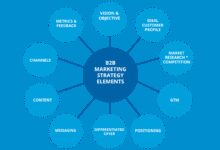

1. Understanding the Core of a Modern B2B Marketing Strategy

A successful b2b marketing strategy goes beyond traditional advertising. It’s about building relationships, delivering value, and aligning your brand with the complex decision-making processes of other businesses. Unlike B2C, B2B sales cycles are longer, involve multiple stakeholders, and require deeper content engagement.
What Defines B2B Marketing?
B2B (Business-to-Business) marketing refers to the strategies and tactics companies use to sell products or services to other organizations. This differs significantly from B2C (Business-to-Consumer) in tone, channel usage, and messaging precision.
- Decision-making is rational, data-driven, and often involves committees.
- Purchase cycles are longer and require nurturing.
- Content must address pain points, ROI, and integration capabilities.
Why a Strategic Approach Matters
Without a structured b2b marketing strategy, companies risk wasting resources on ineffective campaigns. A well-defined strategy ensures alignment between marketing, sales, and customer success teams. According to HubSpot’s 2023 B2B Marketing Report, businesses with documented strategies are 327% more likely to report success in their campaigns.
“Marketing without strategy is like sailing without a compass—directionless and destined to drift.” — Philip Kotler
2. Building a Data-Driven B2B Marketing Strategy
Data is the backbone of any high-performing b2b marketing strategy. It enables personalization, improves targeting accuracy, and enhances campaign ROI. Companies that leverage data effectively see up to 60% higher conversion rates.
Collecting and Analyzing Customer Data
Start by gathering first-party data from your CRM, website analytics, and customer interactions. Use tools like Google Analytics, HubSpot, or Salesforce to map customer behavior across touchpoints.
- Track page visits, time on site, and content downloads.
- Segment leads based on industry, company size, and job title.
- Identify patterns in conversion paths and drop-off points.
Leveraging Predictive Analytics
Predictive analytics uses machine learning to forecast which leads are most likely to convert. Platforms like Marketo and Pardot integrate AI to score leads and recommend next-best actions.
For example, if a lead repeatedly visits pricing pages and downloads case studies, the system can trigger a personalized email sequence or alert a sales rep to make contact.
3. Crafting a Buyer-Centric B2B Marketing Strategy
The most effective b2b marketing strategy puts the buyer at the center. This means understanding their challenges, goals, and journey—from awareness to decision.
Developing Detailed Buyer Personas
Buyer personas are semi-fictional representations of your ideal customers. They help tailor messaging, content, and channel selection. A typical persona includes:
- Job title and responsibilities
- Industry and company size
- Pain points and goals
- Preferred communication channels
- Objections to purchase
For instance, a CTO persona might prioritize security, scalability, and integration, while a CFO focuses on cost savings and ROI.
Mapping the Buyer’s Journey
The buyer’s journey consists of three stages: Awareness, Consideration, and Decision. Each requires different content types and messaging.
- Awareness: Blog posts, infographics, and social media content that highlight problems.
- Consideration: Whitepapers, webinars, and comparison guides that present solutions.
- Decision: Case studies, demos, and free trials that prove value.
Aligning your b2b marketing strategy with this journey ensures you deliver the right message at the right time.
4. Content Marketing as a Pillar of B2B Marketing Strategy
Content is king in B2B marketing. In fact, Content Marketing Institute reports that 91% of B2B marketers use content to reach customers. But not all content is created equal—quality and relevance are key.
Creating High-Value, Educational Content
B2B buyers are researchers. They consume an average of 13 pieces of content before making a purchase decision. Your content should educate, not sell.
- Write in-depth guides that solve specific industry problems.
- Produce video tutorials showing product implementation.
- Host expert interviews or podcasts with thought leaders.
For example, a SaaS company offering HR software could publish a guide titled “How to Reduce Employee Turnover by 40% in 6 Months.” This positions them as an authority while addressing a real pain point.
Optimizing Content for SEO and Distribution
Even the best content fails if no one sees it. Optimize for search engines using keyword research tools like Ahrefs or SEMrush. Target long-tail keywords such as “best CRM for mid-sized manufacturing firms.”
Distribute content across multiple channels:
- LinkedIn for professional audiences
- Email newsletters for nurturing leads
- Industry forums and guest posting on niche blogs
Repurpose content into bite-sized social media posts, infographics, or LinkedIn articles to maximize reach.
5. Leveraging Account-Based Marketing in Your B2B Marketing Strategy
Account-Based Marketing (ABM) is one of the most powerful evolutions in b2b marketing strategy. Instead of casting a wide net, ABM focuses on high-value accounts with personalized campaigns.
What Is Account-Based Marketing?
ABM treats individual accounts as markets of one. Marketing and sales teams collaborate to create custom experiences for target companies. This approach is especially effective for enterprise sales.
- Identify high-potential accounts using firmographic data.
- Develop personalized messaging and content.
- Engage decision-makers through targeted ads, emails, and direct outreach.
According to ABM Institute, companies using ABM report 200% higher sales pipeline efficiency.
Implementing an ABM Framework
To launch an ABM initiative:
- Align Sales and Marketing: Jointly define target accounts and success metrics.
- Create Personalized Campaigns: Use dynamic landing pages, direct mail, and LinkedIn ads tailored to each account.
- Measure Engagement: Track email opens, website visits, and content downloads per account.
- Scale with Technology: Use platforms like Terminus or Demandbase to automate and scale ABM efforts.
For example, a cybersecurity firm might run a LinkedIn ad campaign targeting IT directors at Fortune 500 companies, offering a free security audit tailored to their industry.
6. Integrating Digital Channels into Your B2B Marketing Strategy
A modern b2b marketing strategy must harness digital channels effectively. From social media to paid ads, each platform plays a unique role in reaching and converting B2B buyers.
Maximizing LinkedIn for B2B Lead Generation
LinkedIn is the #1 platform for B2B marketing. With over 900 million users, it offers unparalleled access to professionals and decision-makers.
- Optimize your company page with clear value propositions.
- Use LinkedIn Ads to target by job title, industry, and company size.
- Encourage employees to share content—employee advocacy increases reach by 561%.
Run Sponsored Content campaigns promoting whitepapers or webinar sign-ups. Use InMail for direct outreach to warm leads.
Using Paid Advertising Strategically
Google Ads and social media ads can accelerate lead acquisition when used correctly. Focus on intent-based keywords like “best project management software for teams” rather than generic terms.
- Use retargeting ads to re-engage website visitors.
- Run A/B tests on ad copy and landing pages.
- Set up conversion tracking to measure ROI accurately.
Platforms like LinkedIn Campaign Manager allow granular targeting, ensuring your budget is spent efficiently.
7. Measuring and Optimizing Your B2B Marketing Strategy
A b2b marketing strategy isn’t set in stone—it must evolve based on performance data. Regular measurement ensures you stay agile and responsive to market changes.
Key Performance Indicators (KPIs) to Track
Not all metrics are created equal. Focus on KPIs that reflect real business impact:
- Customer Acquisition Cost (CAC): How much it costs to acquire a new customer.
- Customer Lifetime Value (CLV): Total revenue expected from a customer over time.
- Marketing Qualified Leads (MQLs): Leads deemed ready for sales follow-up.
- Conversion Rates: Percentage of leads moving from one stage to the next.
- ROI by Channel: Which channels deliver the highest return.
Tools like Google Data Studio or HubSpot dashboards can visualize these metrics in real time.
Continuous Optimization Through Testing
Optimization is an ongoing process. Use A/B testing to refine email subject lines, landing page designs, and CTAs.
- Test two versions of a lead magnet to see which converts better.
- Experiment with different email send times and days.
- Iterate on ad creatives based on engagement data.
According to Optimizely, companies that run regular experiments see up to 30% improvement in conversion rates over time.
8. Embracing Marketing Automation in B2B Marketing Strategy
Marketing automation is no longer optional—it’s a necessity for scaling a b2b marketing strategy efficiently. It reduces manual work, improves lead nurturing, and ensures timely follow-ups.
Selecting the Right Marketing Automation Tools
Choose platforms that integrate with your CRM and support multi-channel campaigns. Popular options include:
- HubSpot: Ideal for inbound marketing and CRM integration.
- Marketo Engage: Powerful for enterprise-level automation.
- ActiveCampaign: Great for small to mid-sized businesses with advanced automation needs.
These tools allow you to set up drip email campaigns, score leads, and trigger actions based on user behavior.
Designing Effective Drip Campaigns
Drip campaigns nurture leads over time with automated, relevant messages. For example:
- Day 1: Welcome email with a link to a popular blog post.
- Day 3: Send a case study relevant to their industry.
- Day 7: Invite them to a live demo or consultation.
- Day 14: Offer a limited-time discount or free trial.
Personalization increases open rates by up to 26%. Use dynamic fields to insert the recipient’s name, company, or recent activity.
9. The Role of Thought Leadership in B2B Marketing Strategy
Establishing your brand as a thought leader builds trust and credibility—critical factors in B2B purchasing decisions.
Creating Authority Through Content
Thought leadership content goes beyond product promotion. It shares insights, predictions, and original research that position your brand as an industry expert.
- Publish original research reports with data from surveys or internal analytics.
- Write opinion pieces on emerging trends like AI in supply chain management.
- Speak at industry conferences or host webinars with influencers.
For example, a financial software company could release an annual “State of SMB Finance” report, widely shared across media and analyst circles.
Leveraging Executive Visibility
CEOs and subject matter experts should be visible. Encourage them to:
- Write LinkedIn articles or Medium posts.
- Appear on industry podcasts.
- Engage in Twitter/X discussions using relevant hashtags.
When executives share insights, it humanizes the brand and amplifies reach. According to Edelman, 62% of B2B buyers prefer to buy from companies whose leaders they perceive as trustworthy.
10. Adapting to Emerging Trends in B2B Marketing Strategy
The B2B marketing landscape is evolving rapidly. Staying ahead requires embracing innovation and new technologies.
The Rise of AI and Personalization
Artificial Intelligence is transforming b2b marketing strategy by enabling hyper-personalization at scale. AI can:
- Generate personalized email copy based on user behavior.
- Predict the best time to send follow-ups.
- Recommend content based on past engagement.
Tools like Drift use AI chatbots to qualify leads in real time, reducing response time from days to seconds.
Video and Interactive Content
Video is becoming essential in B2B marketing. 81% of businesses use video as a marketing tool, and 93% say it helps generate leads.
- Create product explainer videos under 2 minutes.
- Produce customer testimonial videos with measurable results.
- Use interactive demos or quizzes to engage users.
Host videos on your website, YouTube, and LinkedIn. Add captions and SEO-friendly titles to improve discoverability.
What is a B2B marketing strategy?
A B2B marketing strategy is a comprehensive plan that outlines how a business will promote its products or services to other businesses. It includes target audience identification, content planning, channel selection, and performance measurement to drive lead generation and revenue growth.
How is B2B marketing different from B2C?
B2B marketing involves longer sales cycles, multiple decision-makers, and a focus on ROI and business value. B2C marketing targets individual consumers with emotional appeals and shorter purchase journeys.
What are the most effective channels for B2B marketing?
LinkedIn, email marketing, SEO-optimized content, webinars, and account-based marketing platforms are among the most effective. The best channels depend on your audience and industry.
How do you measure the success of a B2B marketing strategy?
Track KPIs like lead conversion rate, customer acquisition cost (CAC), customer lifetime value (CLV), marketing ROI, and engagement metrics across channels.
Can small businesses use advanced B2B marketing strategies?
Absolutely. Even small businesses can leverage tools like HubSpot, Mailchimp, and LinkedIn Ads to execute sophisticated strategies on a budget. Focus on niche targeting and high-value content.
A powerful b2b marketing strategy is not a one-size-fits-all solution—it’s a dynamic, data-driven framework that evolves with your market. From understanding buyer personas to leveraging AI and automation, every element must work in harmony to generate qualified leads and close high-value deals. The most successful companies don’t just market their products; they build relationships, demonstrate expertise, and deliver measurable value at every stage of the customer journey. By adopting the tactics outlined—from content marketing to account-based strategies—you can transform your B2B marketing from a cost center into a growth engine. Start small, measure relentlessly, and scale what works. The future of B2B growth belongs to those who think strategically and act decisively.
Further Reading:
