In the fast-paced world of B2B sales, not all leads are created equal. That’s where b2b lead scoring comes in—a game-changing strategy that separates the high-potential prospects from the tire-kickers. With the right system, your sales team can focus on what truly matters: closing deals.

What Is B2B Lead Scoring and Why It Matters

B2B lead scoring is a systematic approach used by sales and marketing teams to rank prospects based on their perceived value to the organization. This value is determined by a combination of demographic, behavioral, and firmographic data. The goal? To prioritize leads so that sales teams can engage with the most promising ones first.
Defining B2B Lead Scoring
At its core, b2b lead scoring assigns numerical values—positive or negative—to potential customers based on how closely they match your ideal customer profile (ICP). These scores are derived from both explicit and implicit data.
- Explicit data: Information directly provided by the lead, such as job title, company size, industry, and location.
- Implicit data: Behavioral signals like website visits, content downloads, email engagement, and social media interactions.
By combining these data points, companies can create a more accurate picture of a lead’s readiness to buy.
The Evolution of Lead Scoring in B2B
Lead scoring isn’t new—it’s been around since the early days of CRM systems. However, traditional models were often static and rule-based, relying heavily on gut feeling. Today’s b2b lead scoring leverages advanced analytics, machine learning, and real-time data integration.
According to HubSpot, businesses that implement lead scoring see a 10% increase in sales productivity and a 15% reduction in marketing costs. This evolution has made lead scoring not just a nice-to-have, but a necessity in competitive markets.
Why B2B Lead Scoring Is a Game-Changer
Without a proper scoring system, sales teams waste time chasing unqualified leads. B2B lead scoring flips the script by ensuring that only the most engaged and relevant prospects reach the sales pipeline.
“Lead scoring is the bridge between marketing and sales alignment. It ensures both teams are speaking the same language when it comes to lead quality.” — Marketo
It also improves conversion rates, shortens sales cycles, and increases customer lifetime value by focusing on high-fit accounts from the start.
The Core Components of Effective B2B Lead Scoring
To build a successful b2b lead scoring model, you need to understand its foundational elements. These components work together to create a dynamic, responsive system that adapts to changing buyer behavior.
Firmographic Data: The Foundation of Fit
Firmographic data refers to the characteristics of a company, such as industry, revenue, number of employees, and geographic location. This information helps determine whether a lead’s company aligns with your ideal customer profile.
- For example, if your SaaS product is designed for mid-sized tech companies in North America, a lead from a 500-employee software firm in Toronto would score higher than a small retail business in Southeast Asia.
- Tools like LinkedIn Sales Navigator and Clearbit can enrich your CRM with detailed firmographic insights.
Accurate firmographic scoring ensures your team isn’t wasting time on companies that don’t match your target market.
Demographic and Role-Based Scoring
While company fit is crucial, individual attributes matter just as much. Demographic data includes job title, department, seniority level, and decision-making authority.
A CTO or VP of IT will naturally score higher than a junior developer when selling enterprise cybersecurity software. Why? Because they have budget control and influence over purchasing decisions.
- Use role-based scoring to identify champions, influencers, and decision-makers.
- Integrate with HR databases or intent data platforms like 6sense to validate job roles and track changes.
This layer adds precision to your b2b lead scoring, ensuring that outreach is directed at the right people.
Behavioral Scoring: Tracking Engagement Signals
Behavioral scoring evaluates how leads interact with your brand. This includes actions like visiting pricing pages, downloading whitepapers, attending webinars, or opening emails.
The more engaged a lead is, the higher their score. For instance:
- +10 points for visiting the pricing page
- +15 points for attending a live demo
- +5 points for opening three consecutive emails
- -5 points for unsubscribing or inactivity over 30 days
Behavioral data is powerful because it reflects intent. A lead who repeatedly visits your product page is likely closer to a buying decision than one who only read a blog post.
How to Build a B2B Lead Scoring Model from Scratch
Creating a b2b lead scoring model doesn’t have to be overwhelming. With a structured approach, you can develop a system that aligns with your business goals and sales process.
Step 1: Define Your Ideal Customer Profile (ICP)
Before assigning scores, you need to know who you’re scoring. Your ICP is a detailed description of the companies and individuals most likely to benefit from your product.
- Analyze your existing customer base to identify common traits.
- Interview sales reps to understand what makes a ‘good’ lead.
- Use win/loss analysis to see patterns in successful versus failed deals.
Once defined, your ICP becomes the benchmark against which all leads are measured.
Step 2: Identify Key Scoring Criteria
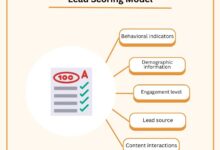
Break down your ICP into measurable attributes. These become your scoring criteria. Common categories include:
- Company size (e.g., 200–1,000 employees)
- Industry (e.g., SaaS, fintech, healthcare)
- Job title (e.g., Director, VP, C-level)
- Engagement level (e.g., webinar attendance, demo request)
Assign point values based on importance. For example, being a CTO might be worth +25 points, while downloading a case study could be +10.
Step 3: Set Thresholds for Sales Readiness
Not every lead needs to go straight to sales. Define score thresholds that determine lead status:
- Marketing Qualified Lead (MQL): 50–79 points — engaged but not yet ready for sales.
- Sales Qualified Lead (SQL): 80+ points — ready for direct outreach.
- Disqualified: Below 30 points — low fit or engagement.
These thresholds create a clear handoff process between marketing and sales, reducing friction and improving efficiency.
Integrating B2B Lead Scoring with CRM and Marketing Automation
A b2b lead scoring system is only as good as the tools that support it. Integration with CRM and marketing automation platforms ensures real-time updates and seamless workflows.
Choosing the Right CRM Platform
Your CRM is the backbone of your lead scoring system. It stores all lead data and enables score tracking over time. Popular options include:
- Salesforce: Highly customizable with robust lead scoring features.
- HubSpot CRM: User-friendly with built-in scoring templates.
- Zoho CRM: Affordable with strong automation capabilities.
Ensure your CRM can handle both explicit and behavioral data, and supports scoring rules that can be adjusted as your business evolves.
Leveraging Marketing Automation Tools
Marketing automation platforms like Marketo, Pardot, and ActiveCampaign track user behavior and feed it into your scoring model.
- Automatically update lead scores when a user downloads a whitepaper or clicks a CTA.
- Trigger alerts to sales reps when a lead reaches the SQL threshold.
- Segment email campaigns based on score ranges to deliver personalized content.
These tools reduce manual work and ensure scoring is consistent and data-driven.
Synchronizing Data Across Systems
Data silos can cripple your b2b lead scoring efforts. If your CRM, marketing automation, and website analytics aren’t talking to each other, your scores will be inaccurate.
- Use integration platforms like Zapier or Workato to sync data in real time.
- Implement UTM parameters to track campaign performance and attribute behavior to specific sources.
- Regularly audit data quality to remove duplicates and outdated entries.
Consistent, clean data is the foundation of reliable lead scoring.
Advanced B2B Lead Scoring Techniques
Once you’ve mastered the basics, it’s time to level up. Advanced b2b lead scoring techniques use predictive analytics, AI, and intent data to deliver even greater accuracy.
Predictive Lead Scoring with Machine Learning
Predictive lead scoring uses algorithms to analyze historical data and predict which leads are most likely to convert. Unlike rule-based scoring, it learns from past outcomes and adjusts over time.
- Platforms like SugarCRM and InsideSales offer built-in predictive scoring.
- These systems identify hidden patterns—like the combination of visiting the pricing page twice and attending a webinar—that correlate with conversion.
According to a study by Gartner, companies using predictive scoring see up to a 30% increase in lead conversion rates.
Intent Data: The Secret Weapon in B2B Lead Scoring
Intent data reveals what prospects are researching online, even before they engage with your brand. Third-party intent data providers like 6sense, Gombi, and Terminus track content consumption across thousands of websites.
- If a company is actively researching “cloud security solutions,” that’s a strong buying signal.
- Intent data allows you to score leads based on market behavior, not just your own website interactions.
This proactive insight gives you a competitive edge by identifying hot leads before your competitors do.
Account-Based Scoring for Enterprise Sales
In account-based marketing (ABM), scoring isn’t just about individuals—it’s about entire accounts. Account-based scoring aggregates scores from multiple contacts within a target company.
- If three decision-makers from the same company engage with your content, the account score increases significantly.
- This approach helps identify accounts that are collectively showing buying intent.
Tools like Demandbase and Terminus specialize in ABM scoring, enabling sales teams to prioritize high-value accounts.
Common Pitfalls in B2B Lead Scoring (And How to Avoid Them)
Even the best b2b lead scoring models can fail if not managed properly. Here are the most common mistakes and how to steer clear of them.
Over-Reliance on Demographics
While firmographic and demographic data are important, focusing solely on them ignores behavioral intent. A perfect-fit company that never visits your site isn’t ready to buy.
- Solution: Balance demographic scoring with behavioral signals.
- Use a weighted model where behavior accounts for at least 40% of the total score.
As Forrester notes, “Intent trumps fit when predicting conversion.”
Lack of Sales and Marketing Alignment
If sales doesn’t trust the leads marketing sends, the entire system breaks down. Misalignment often stems from unclear definitions of MQLs and SQLs.
- Solution: Hold regular sync meetings between teams to review scoring criteria.
- Create a Service Level Agreement (SLA) that defines response times and lead expectations.
Transparency builds trust and ensures both teams are working toward the same goals.
Failing to Update Scoring Models
Markets change. Buyer behavior evolves. A scoring model that worked last year may be irrelevant today.
- Solution: Review and recalibrate your model quarterly.
- Use A/B testing to experiment with new scoring rules.
- Incorporate feedback from sales reps on lead quality.
Agility is key to maintaining an effective b2b lead scoring system.
Measuring the Success of Your B2B Lead Scoring Strategy
Implementing b2b lead scoring is just the beginning. To ensure long-term success, you need to track performance and optimize continuously.
Key Performance Indicators (KPIs) to Track
Monitor these metrics to evaluate the effectiveness of your scoring model:
- Conversion Rate from MQL to SQL: Are more leads qualifying for sales?
- Sales Cycle Length: Is the time to close decreasing?
- Lead-to-Customer Rate: How many scored leads become paying customers?
- Sales Team Satisfaction: Are reps happy with lead quality?
Use dashboards in your CRM or analytics platform to visualize these KPIs over time.
Using A/B Testing to Optimize Scoring Rules
Don’t assume your initial scoring model is perfect. Use A/B testing to compare different scoring criteria.
- Test two versions: one with higher weight on job title, another on behavioral engagement.
- Measure which group converts faster and at a higher rate.
- Implement the winning model across your database.
Continuous testing ensures your b2b lead scoring remains data-driven and effective.
Feedback Loops Between Sales and Marketing
The best scoring models are collaborative. Establish feedback loops so sales can report on lead quality.
- Create a simple form for reps to rate incoming leads (e.g., 1–5 stars).
- Use this feedback to adjust scoring weights and disqualify low-performing segments.
- Hold monthly reviews to discuss trends and refine the model.
This closed-loop system turns b2b lead scoring into a living, evolving process.
Future Trends in B2B Lead Scoring
The future of b2b lead scoring is smarter, faster, and more predictive. Emerging technologies are reshaping how businesses identify and engage high-value prospects.
AI-Powered Real-Time Scoring
Artificial intelligence is enabling real-time lead scoring that updates with every click, email open, or page view. AI models can process vast amounts of data instantly, adjusting scores dynamically.
- Platforms like Salesfusion and People.ai use AI to predict lead behavior with high accuracy.
- Real-time alerts notify sales the moment a lead hits a critical threshold.
This level of responsiveness ensures no opportunity is missed.
Integration with Conversational AI and Chatbots
Chatbots are no longer just for customer service. They’re becoming scoring tools by engaging visitors in real time and collecting qualifying information.
- A chatbot can ask, “Are you evaluating solutions for your team?” and assign points based on the response.
- It can also track conversation depth—longer chats indicate higher interest.
When integrated with your CRM, chatbot interactions feed directly into your b2b lead scoring model.
The Rise of Privacy-Compliant Scoring
With increasing data privacy regulations (GDPR, CCPA), companies must ensure their scoring practices are compliant.
- Avoid tracking without consent.
- Provide opt-out options and honor data deletion requests.
- Use zero-party data—information willingly shared by users—as a primary scoring input.
Privacy-first scoring builds trust and ensures long-term sustainability.
What is b2b lead scoring?
B2B lead scoring is a methodology used to rank leads based on their likelihood to become customers. It combines demographic, firmographic, and behavioral data to assign a numerical score, helping sales teams prioritize high-value prospects.
How do you calculate a lead score?
Lead scores are calculated by assigning points to various attributes and behaviors. For example, +25 points for being a CTO, +10 for downloading a whitepaper, and -5 for inactivity. The total score determines the lead’s qualification status.
What tools are best for b2b lead scoring?
Top tools include Salesforce, HubSpot, Marketo, Pardot, and specialized platforms like 6sense and Demandbase. These integrate with CRM and marketing automation systems to enable dynamic scoring.
How often should you update your lead scoring model?
It’s recommended to review and update your model quarterly. Market conditions, buyer behavior, and product offerings change, so your scoring criteria should evolve accordingly.
Can small businesses use b2b lead scoring?
Absolutely. Even small teams can implement simple scoring models using free or low-cost tools like HubSpot CRM. The key is starting small and scaling as you gather more data.
B2B lead scoring is no longer optional—it’s a strategic imperative. By systematically evaluating leads based on fit and intent, businesses can dramatically improve sales efficiency, shorten cycles, and boost revenue. From defining your ideal customer profile to leveraging AI and intent data, the journey to effective lead scoring requires collaboration, data integrity, and continuous optimization. The result? A leaner, smarter sales funnel that delivers predictable growth. Whether you’re just starting out or looking to refine an existing model, the principles outlined in this guide provide a comprehensive roadmap to mastering b2b lead scoring in today’s competitive landscape.
Further Reading:
